Subterranean termite monitoring & remediation addresses the specific physics of cold-climate soil pest management along Lake Superior. In Duluth, winter soil freezing extends 42 to 60 inches below the surface, driving…
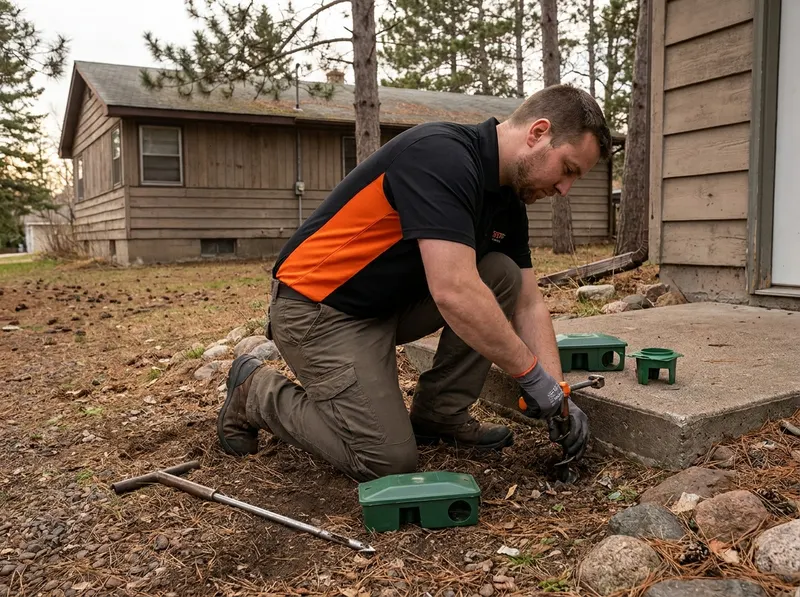
Subterranean termite monitoring & remediation addresses the specific physics of cold-climate soil pest management along Lake Superior. In Duluth, winter soil freezing extends 42 to 60 inches below the surface, driving subterranean termites (Reticulitermes flavipes) deep under foundation footings, heated basements, and slab-on-grade utility penetrations. Older timber-framed estates in Congdon Park, hillside properties in Chester Park, and older stone-and-mortar basements in West Duluth frequently provide artificial warmth that keeps these insects active throughout sub-zero winters. When foundational mud tubes appear along interior block walls or joists near boiler rooms, topical spraying fails because the parent colony resides below the slab. Proper remediation requires drilling through masonry to introduce non-repellent termiticide barriers or embedding ground-level bait stations containing chitin-synthesis inhibitors that foraging workers transport back to the primary reproductive nest.
Selecting between continuous bait monitoring systems and full liquid soil termiticides depends on architectural construction and environmental proximity to Lake Superior. Properties along Park Point or near Lester River in Lakeside-Lester Park feature high water tables and sandy gravel, where deep chemical trenches can encounter groundwater constraints; these sites rely heavily on locked, tamper-resistant monitoring stations checked quarterly. Conversely, bedrock-heavy foundations typical of Piedmont Heights and Duluth Heights require direct interior perimeter treatments along expansion joints, plumbing chases, and sill plates. The trade-off between these methods centers on speed versus continuous environmental footprint: liquid soil barriers provide immediate isolation within 24 to 72 hours, whereas bait monitoring systems require 60 to 90 days to achieve colony-level elimination through cyclical feeding.
1. Structural diagnostic inspection: The technician examines floor joists, rim joists, crawl spaces, and basement perimeter walls for shelter tubes, hollowed wood grain, and emergence swarmers, differentiating termite activity from common regional carpenter ant excavations. 2. Soil barrier application or station placement: In-ground monitoring stations are inserted into soil beds along the home's outer foundation perimeter at 10-foot intervals, or liquid termiticide is applied via trenching at 4 gallons per 10 linear feet down to the footing. 3. Long-term verification schedule: Bait stations are audited quarterly during snow-free months to confirm colony suppression, ensuring that exterior freeze-thaw cycles do not compromise structural timber security.
Every job gets a firm, written price after a free on-site visit.
Tell us about your subterranean termite monitoring & remediation job in Duluth and we'll send a clear, written quote, usually the same day.
 Virelza Pest Control