Hillside geology across Duluth creates severe subterranean hydraulic pressure against stone, rubble, and concrete-block foundations. In older neighborhoods such as Congdon Park, Chester Park, and Lakeside-Lester Park,…
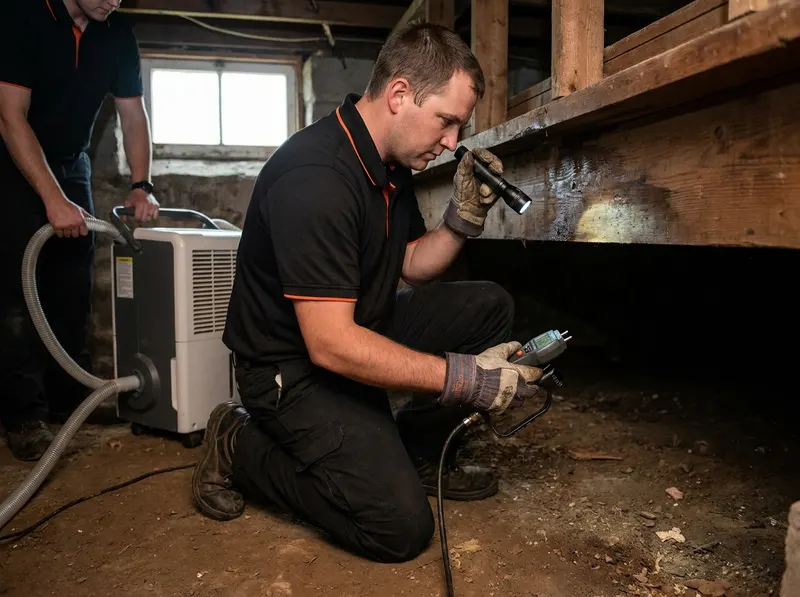
Hillside geology across Duluth creates severe subterranean hydraulic pressure against stone, rubble, and concrete-block foundations. In older neighborhoods such as Congdon Park, Chester Park, and Lakeside-Lester Park, homes frequently feature uninsulated fieldstone walls or subterranean ledge rock that channels cold groundwater directly into crawlspaces. When interior sub-slab humidity exceeds 70%, fungal spores colonize structural pine floor joists, emitting scents that attract wood-boring carpenter ants and subterranean silverfish. In contrast, sandy soil conditions along Park Point produce low-elevation water tables where standing crawlspace pools harbor sustained springtail and sowbug populations throughout spring freeze-thaw cycles. Managing these intrusions requires shifting the subterranean microclimate rather than spraying broad-spectrum surface chemicals onto saturated block.
Sub-grade management combines physical mechanical barriers with localized perimeter controls. Technicians inspect the critical rim joist zone, often the primary frost-line migration entry for rodents and moisture insects in Piedmont Heights, West Duluth, and Duluth Heights, using calibrated pin-type moisture meters. If sub-floor framing wood moisture content registers above 19%, fungal decay initiates, softening cellulose so carpenter ants can hollow out structural timbers without consuming the wood. Sealing sill plates, closing crawlspace ventilation during high-dewpoint lake-effect weeks, and placing 10-mil polyethylene vapor retarders directly halts pest reproductive cycles. Where stone basements in Lincoln Park or Morgan Park show severe efflorescence and weeping mortar, directed desiccant dust applications into cracks eliminate camel crickets without volatilizing airborne toxins into upstairs living quarters.
Selecting crawlspace and basement moisture pest management fits properties experiencing seasonal basement insect blooms linked directly to humidity. If foundation walls remain dry and insects appear strictly on upper levels, standard interior crack-and-crevice treatments are indicated. The operational trade-off of sub-grade environmental remediation is that structural vapor exclusion demands clearing crawlspace clearances down to at least 18 inches, requiring initial debris extraction, but permanently lowers the carrying capacity for wood-destroying pests without relying on repetitive monthly chemical applications.
Every job gets a firm, written price after a free on-site visit.
Tell us about your crawlspace and basement moisture pest management job in Duluth and we'll send a clear, written quote, usually the same day.
 Virelza Pest Control