Northern Minnesota weather creates severe rodent pressure as autumn temperatures decline across St. Louis County. When ground frosts penetrate 3 to 5 feet into the subsoil, deer mice (Peromyscus maniculatus) and Norway…
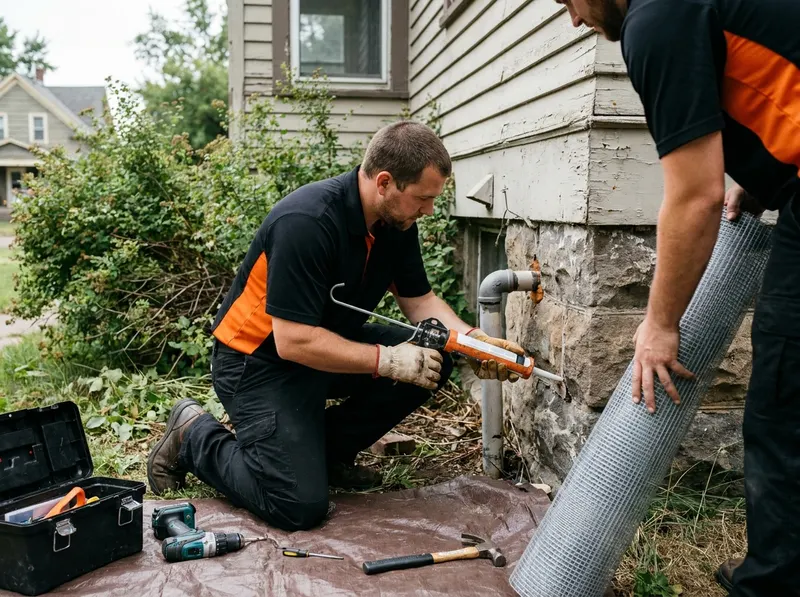
Northern Minnesota weather creates severe rodent pressure as autumn temperatures decline across St. Louis County. When ground frosts penetrate 3 to 5 feet into the subsoil, deer mice (Peromyscus maniculatus) and Norway rats (Rattus norvegicus) seek warm thermal voids inside home foundations, basements, and attic soffits. In hillside Duluth neighborhoods like Piedmont Heights, Kenwood, and Duluth Heights, older rock-rubble foundations and split-granite basements shift under freeze-thaw cycles, opening dime-sized masonry gaps. Trapping alone fails if exterior thermal leaks remain open, because the exterior population continually replaces captured pests. Residential rodent exclusion creates an impenetrable physical boundary around the building perimeter rather than relying on recurring synthetic toxic baits, which risk leaving dead rodents behind wall cavities.
Older architectural timber-framed homes near Glensheen Historic Estate in Congdon Park or historic Victorians in Chester Park and Lakeside-Lester Park often feature complicated rooflines, exposed crawlspaces, and decorative architectural trim that allow mice vertical access to second-story eaves. A house mouse requires an opening of only 0.25 inches (roughly the diameter of a standard pencil) to gain entry. Technicians measure every foundation penetration, including air-conditioner line sets, dryer vent exhausts, natural gas pipes, and sill plate overhangs along West Duluth, Lincoln Park, and Morgan Park slab-on-grade homes. On Park Point, high water tables and sandy coastal subsoils drive rodents upward into floor joists. Exclusion secures these openings with 0.25-inch galvanized hardware cloth, mortared flashing, and steel wool backing that rodents cannot gnaw through.
Homeowners choose full physical exclusion over continuous broadcast rodenticide programs when domestic safety, indoor air quality, and permanent prevention take priority. Interior chemical baiting introduces risk to household domestic pets and does not halt winter re-entry. Exclusion requires higher upfront labor to manually inspect and seal every crawlspace vent, roof flashing joint, and masonry seam, whereas standard trapping merely reduces current indoor counts. The procedural work unfolds systematically: 1. Complete perimeter elevation inspection to locate air gaps and rub marks along foundation lines. 2. Exterior mechanical seal installations using galvanized wire mesh, concrete bonding agents, and custom metal flashing. 3. Interior mechanical snap-trapping within attics and utility rooms to clear any animals trapped inside during closure. 4. Follow-up verification inspection after 7 to 10 days to confirm structural integrity and zero interior rodent activity.
Every job gets a firm, written price after a free on-site visit.
Tell us about your residential rodent exclusion job in Duluth and we'll send a clear, written quote, usually the same day.
 Virelza Pest Control