Duluth housing topography presents distinct challenges for insect control. The steep grade along Skyline Parkway and older multi-family structures in Lincoln Park, Chester Park, and Central Hillside often feature…
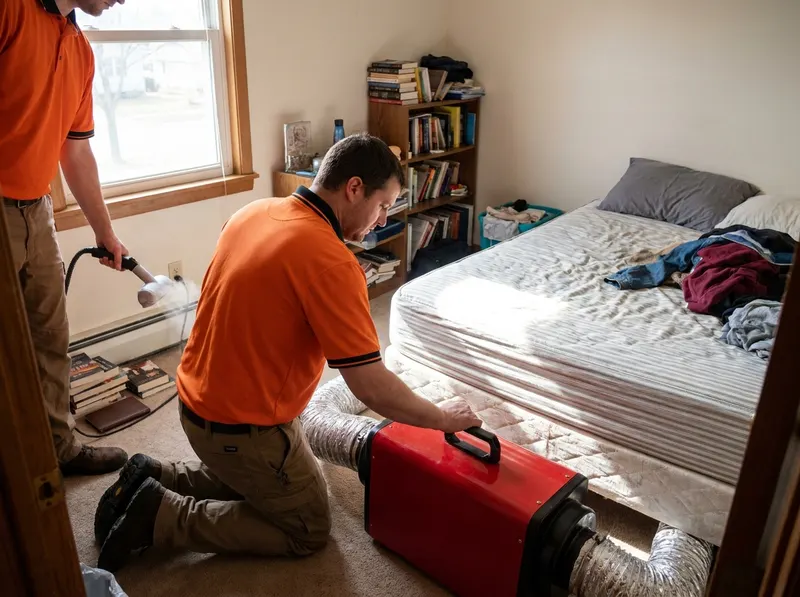
Duluth housing topography presents distinct challenges for insect control. The steep grade along Skyline Parkway and older multi-family structures in Lincoln Park, Chester Park, and Central Hillside often feature continuous baseboard radiator pipes, lath-and-plaster construction, and shared wall voids. In these environments, simple topical store-bought insecticides fail because bed bugs (Cimex lectularius) migrate behind insulation and baseboards away from standard aerosol repellents. The dual-protocol approach pairs forced-air thermal remediation with long-residual contact compounds. Sustained core temperatures between 122°F and 135°F denature the proteins in adult insects, nymphs, and eggs within wall cavities and deep mattress cores, where cold-blooded pests aggregate during winter drafts.
Selecting between full-structure thermal eradication and targeted contact treatment depends on building architecture and infestation age. If insects appear across multiple rooms or in timber-framed lakefront residences in Park Point and Lakeside-Lester Park, full-structure convection heat delivers complete single-visit mortality without leaving chemical exposure on personal garments. For isolated introductions restricted to an entry hallway or guest quarters in Duluth Heights or Piedmont Heights, a targeted contact program using botanical or low-toxicity amorphous silica dust provides effective containment. The trade-off is mechanical: thermal treatment requires significant electrical draw or exterior generator routing along rocky hillside driveways, whereas contact dust applications require strict follow-up protocols 14 to 21 days later to target newly hatched nymphs.
Preparation follows an exacting structural triage routine. 1. Occupants remove heat-sensitive items including candles, vinyl blinds, aerosol canisters, fine oil paintings, and prescription medications. 2. Interior closet doors and dressers are opened to establish air pathways. 3. High-cfm industrial circulating fans position heated air across cold corners near exterior stone foundations, which are common in West Duluth and Congdon Park basements. 4. Wireless temperature sensors monitor subfloors and wall cavities to confirm the thermal lethal zone is maintained for a minimum of 90 minutes. 5. Technicians place a non-repellent residual barrier around utility conduits, plumbing stacks, and entry thresholds to prevent insects from seeking cooler structural pockets.
Every job gets a firm, written price after a free on-site visit.
Tell us about your bed bug thermal & contact eradication job in Duluth and we'll send a clear, written quote, usually the same day.
 Virelza Pest Control