Multi-family housing pest control operates under different structural realities than detached single-family dwellings. When pests infiltrate shared buildings, they travel along communal plumbing stacks, baseboard…
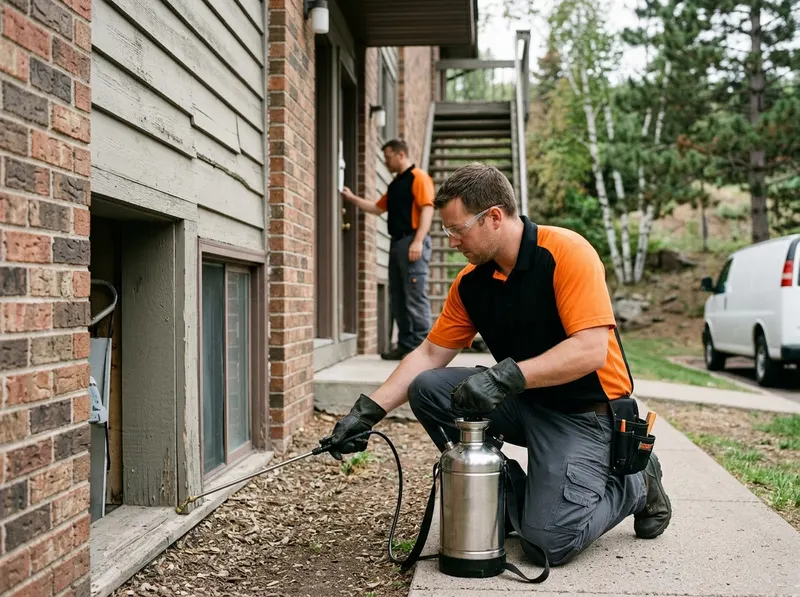
Multi-family housing pest control operates under different structural realities than detached single-family dwellings. When pests infiltrate shared buildings, they travel along communal plumbing stacks, baseboard heating pipes, and drop ceilings. In neighborhoods like Lincoln Park and West Duluth, converted multi-unit homes and older timber-framed buildings often feature shared stone foundations where seasonal temperature plunges drive deer mice inward. In contrast, masonry complexes in Kenwood, Chester Park, or near the University of Minnesota Duluth (UMD) routinely encounter high tenant turnover, which increases the likelihood of hitchhiking German cockroaches or bed bugs traveling through drywall voids. Addressing only a single unit in these environments creates an ineffective cycle: pests simply shift behind partition walls and return after single-room treatments dissipate.
A systematic protocol inspects common basements, shared boiler rooms, crawlspaces, and adjacent living spaces simultaneously. During cold-weather months across St. Louis County, sub-zero exterior temperatures concentrate rodents near foundation perimeter cracks and central heating infrastructure. Multi-family treatment establishes physical barriers using metal mesh, copper stuffing, and silicone sealants around shared pipe penetrations. For interior infestations involving insects, low-impact botanical formulations, insect growth regulators, and dry dustings inside wall cavities target pests without forcing residents into prolonged displacement. Coordinated treatment of vertical stacks ensures that units directly above, below, and beside an infested space receive simultaneous monitoring.
Selecting whole-structure management requires balancing immediate chemical knockdown against mechanical exclusion. Spot-treating individual apartments provides short-term suppression at lower upfront labor, but structural containment and exterior barrier sealing prevent recurring migration across multi-family assets. In historic lakeside properties near Lakeside-Lester Park, Congdon Park, or Park Point, moisture retention off Lake Superior can elevate carpenter ant activity in timber floor joists. In hillside settings like Piedmont Heights or Duluth Heights, variable freeze-thaw cycles shift bedrock contact points, opening quarter-inch gaps beneath mudsills. Comprehensive property assessments verify all entry thresholds across the structure, providing landlords and property caretakers with documented compliance and steady domestic containment.
Every job gets a firm, written price after a free on-site visit.
Tell us about your multi-family housing pest control job in Duluth and we'll send a clear, written quote, usually the same day.
 Virelza Pest Control